What Defines Men’s Gay Swimwear—and Why It’s Going Mainstream
Over the past few decades, men’s swimwear has undergone a dramatic evolution. What was once dominated by loose board shorts and conservative cuts has expanded into a wide spectrum of styles—many of which were pioneered, refined, and popularized within gay communities. Today, bikinis, thongs, G-strings, and ultra-minimal designs are no longer confined to a niche audience. Increasingly, straight men are embracing these styles as well.
This shift isn’t random—it reflects deeper cultural, aesthetic, and psychological changes in how men view their bodies, fashion, and self-expression.
What Makes Men’s Gay Swimwear Distinct?
“Gay swimwear” isn’t a strict category defined by labels—it’s a style language shaped by decades of innovation within LGBTQ+ communities. Several defining characteristics consistently stand out:
1. Body-Positive Design Philosophy
Gay swimwear has always emphasized the body rather than hiding it. Cuts are designed to celebrate physique—whether athletic, slim, or average. This includes:
- Higher-cut leg openings to elongate the legs
- Contoured fits that follow the natural shape of the body
- Minimal coverage that highlights confidence rather than modesty
The core idea: the body is something to showcase, not conceal.
2. Smaller, More Expressive Cuts
One of the most recognizable traits is the progression toward smaller silhouettes:
- Briefs (Speedo-style) – the gateway style for many men
- Bikinis – lower-rise, narrower sides, more sculpted fit
- Thongs & G-strings – minimal rear coverage, maximum freedom
- Micro & ultra-micro designs – pushing boundaries of how little fabric is needed
These designs didn’t emerge overnight—they evolved gradually through beach culture, nightlife, and fashion-forward experimentation.
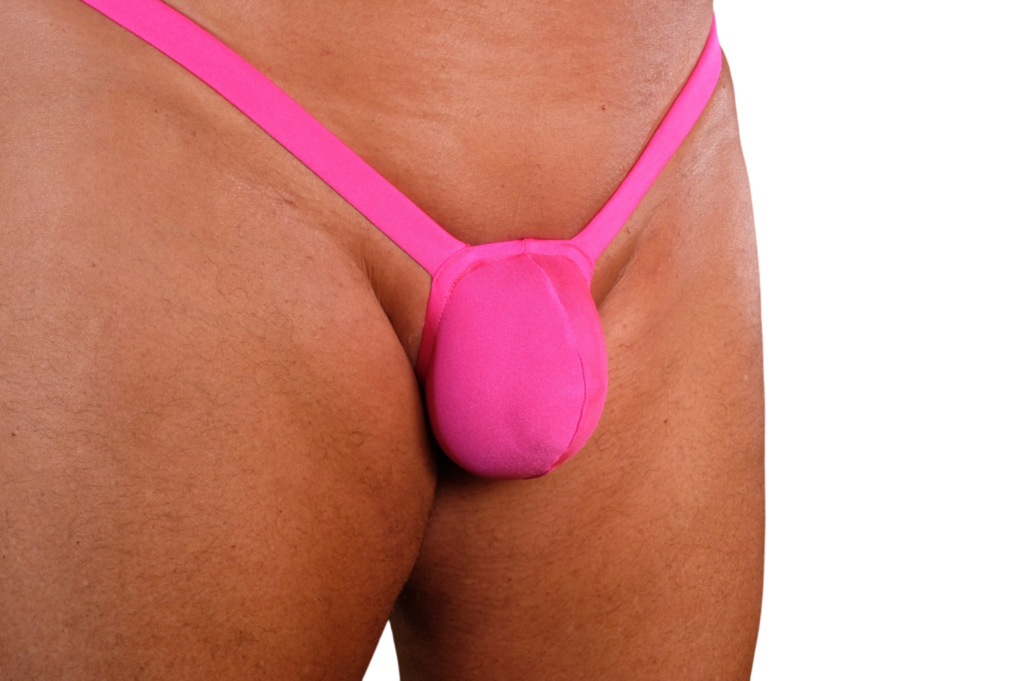
3. Emphasis on Pouch Engineering
A major innovation in gay swimwear is the attention to front pouch design. Instead of flattening or hiding anatomy, these styles:
- Lift and support
- Create a defined silhouette
- Enhance comfort while maintaining a sleek look
Different pouch types—from natural contour to more enhancing shapes—have become a key differentiator in modern swimwear design.
4. Bold Colors, Fabrics, and Finishes
Gay swimwear often embraces visual impact:
- High-shine spandex and silky finishes
- Bright neons, metallics, and prints
- Sheer or semi-sheer fabrics for a daring edge
This aesthetic prioritizes individuality and visibility rather than blending in.
5. Confidence as the Core Element
More than any technical feature, confidence defines the category. These styles are worn with intention—they signal comfort with one’s body and a willingness to stand out.
Why These Styles Were Once Considered “Gay”
Historically, Western culture—especially in the United States—linked masculinity with modesty and practicality in men’s clothing. Baggy board shorts became the default, reinforcing a more reserved image.
Meanwhile, gay communities created their own fashion spaces where:
- Self-expression was encouraged
- Body confidence was celebrated
- Norms could be challenged without judgment
As a result, tighter, smaller, and more revealing swimwear became culturally associated with gay men—not because of the garments themselves, but because of who was willing to wear them first.
Why Straight Men Are Now Adopting These Styles
Today, that cultural boundary is fading quickly. Several major trends explain why:
1. Fitness Culture and Body Pride
Modern fitness culture has changed how men view their bodies. With more men:
- Working out regularly
- Tracking physique goals
- Sharing progress online
There’s a natural desire to wear clothing that shows those results. Smaller swimwear does exactly that.
2. Global Influence
Outside the U.S., especially in Europe and parts of South America, men’s swim briefs have long been standard. As global travel and social media expand:
- Men are exposed to different norms
- “Brief-style” swimwear feels less taboo
- International aesthetics influence local trends
What was once seen as niche now feels global and normal.
3. Social Media and Visibility
Platforms like Instagram and TikTok have normalized body-forward fashion:
- Influencers wear bikinis, thongs, and micro styles openly
- Diverse body types are represented
- Confidence becomes aspirational
The visual repetition of these styles reduces stigma and increases curiosity.
4. Changing Definitions of Masculinity
Masculinity is no longer tied to hiding the body or avoiding fashion. Today’s perspective is broader:
- Confidence is masculine
- Style awareness is masculine
- Self-expression is masculine
This shift allows straight men to adopt styles without feeling they are crossing a boundary.
5. Comfort and Function
There’s also a practical side. Many men discover that smaller swimwear:
- Dries faster
- Feels lighter in the water
- Provides better freedom of movement
Once the initial hesitation fades, comfort often becomes a major selling point.
The Blurring of Style and Identity
One of the most important developments is the separation of clothing from identity. A swimsuit no longer “belongs” to a specific group.
Instead:
- A thong is just a thong
- A bikini is just a bikini
- A micro suit is simply a design choice
What matters is how it fits, feels, and expresses the wearer’s personality—not what label it once carried.
The Future of Men’s Swimwear
Looking ahead, the trajectory is clear:
- Designs will continue getting more varied—from classic briefs to ultra-minimal styles
- Pouch engineering and fabric innovation will expand
- Gender-influenced designs will continue blending aesthetics
- Social acceptance will keep growing
What began as a bold expression within gay communities has now reshaped the entire landscape of men’s swimwear.
Final Thoughts
Men’s gay swimwear isn’t defined by who wears it—it’s defined by a philosophy: confidence, expression, and a celebration of the body.
The reason more straight men are embracing these styles is simple: those values resonate universally. As cultural barriers fall, the distinction between “gay” and “straight” swimwear becomes less meaningful. What remains is a broader, more inclusive world of style—where men can choose exactly how much they want to show, and do so without hesitation.